
Welcome, Unwanted Guests: How to Pest-Proof Your RV for Fall and Winter

As the nights get cooler here in Southern California, we all start thinking about making our homes cozy. Unfortunately, so do mice, rats, and insects. To them, your dark, quiet, and insulated RV looks like a five-star, all-inclusive resort.
It’s a problem we see every fall and winter. An owner opens up their rig for a holiday trip, only to find the tell-tale signs of an infestation: chewed wires, destroyed insulation, and a major mess. The "good" news is that this is a common problem, the bad news is that these repairs can be costly.
At RV Surgeons, we believe in proactive care to save you from massive headaches. A pest-related repair, especially to an electrical harness, can run into the thousands. Here is your definitive guide to pest-proofing your rig for the season.
Section 1: The "Why" - Understanding the Threat
Pests aren't just a nuisance; they're a destructive force.
Rodents (Mice & Rats): Their teeth never stop growing, so they chew constantly. RV wiring, with its soy-based plastic coating, is an irresistible treat. A single chewed wire can disable your slide-out, furnace, or refrigerator, leading to a diagnostic nightmare.
Insects (Ants & Spiders): While less destructive, ants can infest food pantries, and spiders (like Black Widows) love to build nests in dark exterior compartments, like your propane or water heater bays, posing a safety risk.
This isn't just a "storage" problem. Even if you use your rig every few weeks, pests can move in within 24 hours.
Section 2: "Fort Knox" Your Exterior - The Entry Points
Mice can squeeze through a hole the size of a dime. Your RV, unfortunately, is full of them. Your first job is to walk the perimeter of your rig and think like a pest.
The Undercarriage: This is the pest super-highway. Get on a creeper and look where plumbing pipes, electrical wires, and propane lines pass through the floor. These factory-cut holes often have a gap.
Exterior Vents & Covers: Your furnace exhaust, refrigerator access panel, and water heater door are wide-open invitations.
Storage Bays: Check the corners and floors of your storage compartments. Are there any small gaps leading into the cabin? How about the rubber seals around the doors?
Slide-Outs: When your slide is in, there's a complex set of rubber seals. If these are torn, brittle, or out of alignment, they create a perfect entry point.
Jacks & Tires: This is how they get off the ground. While you can't stop them from climbing, you can stop them from getting in from the frame.
Section 3: Your "How-To" Action Plan
Now that you've found the weak spots, it's time to seal them up.
Tool Up: Your pest-proofing kit should include:
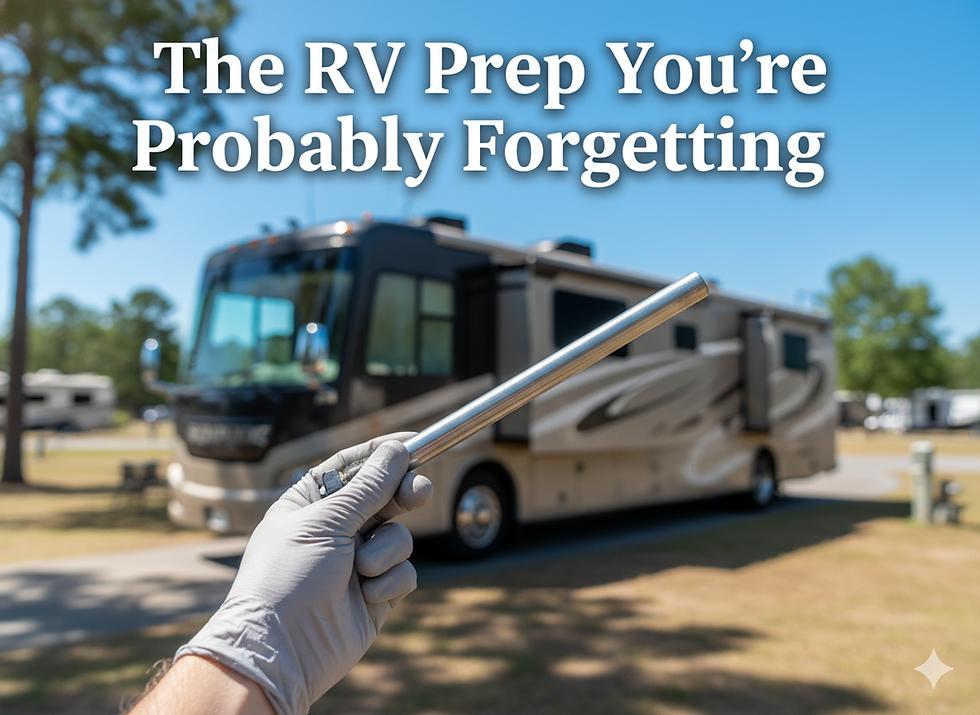
Coarse Steel Wool: (Mice hate chewing this).
Pest-Resistant Spray Foam: (Make sure it's rated for this).
Silicone Sealant.
Fine Metal Mesh/Hardware Cloth: (For vents).
Seal the Gaps (The Right Way): Do NOT just use spray foam. Rodents will chew right through it. The correct method is to pack the hole with steel wool first, then seal it in place with the pest-resistant spray foam. The foam holds the wool, and the wool stops the pests. Use this on every single gap you find in the underbelly.
Screen the Vents: Purchase and install metal mesh insect screens on your furnace, water heater, and fridge vents. This is a simple, inexpensive upgrade that stops insects and most rodents. (This is a quick service we can perform for you!)
Section 4: Don't Invite Them In - Interior Prevention
Sealing the exterior is 90% of the battle, but don't give them a reason to try so hard.
Deep Clean: After every single trip, remove all food. We don't just mean the obvious stuff. We mean the crumbs in the toaster, the spices in the cabinet, the box of pasta, and especially the pet food. Wipe down all surfaces.
Use Deterrents (With Caution): Many people swear by peppermint oil, mothballs, or cedar blocks. These are deterrents, not solutions. They might make the "entrance" smell bad, but they won't stop a determined pest from finding a way into the "kitchen." Rely on sealing the gaps, not on smells.
What About Traps? Traps are for after you already have a problem, not for prevention. Focus on keeping them out in the first place.
Section 5: When to Call RV Surgeons
This can feel like an overwhelming task. If you'd rather have an expert eye, that's what we're here for. Give us a call if:
You already see signs of an infestation (droppings, chewed items).
You see wires that look frayed or chewed (a major fire hazard!).
You're not comfortable crawling under the rig.
You want the peace of mind that comes from a professional inspection and sealing service.
Don't let your vacation fund turn into a pest-repair fund. A few hours of prevention now will save you thousands of dollars and ensure your RV is truly a cozy, safe-haven for you and only you this winter.
Happy and pest-free travels from your friends at RV Surgeons!


Comments